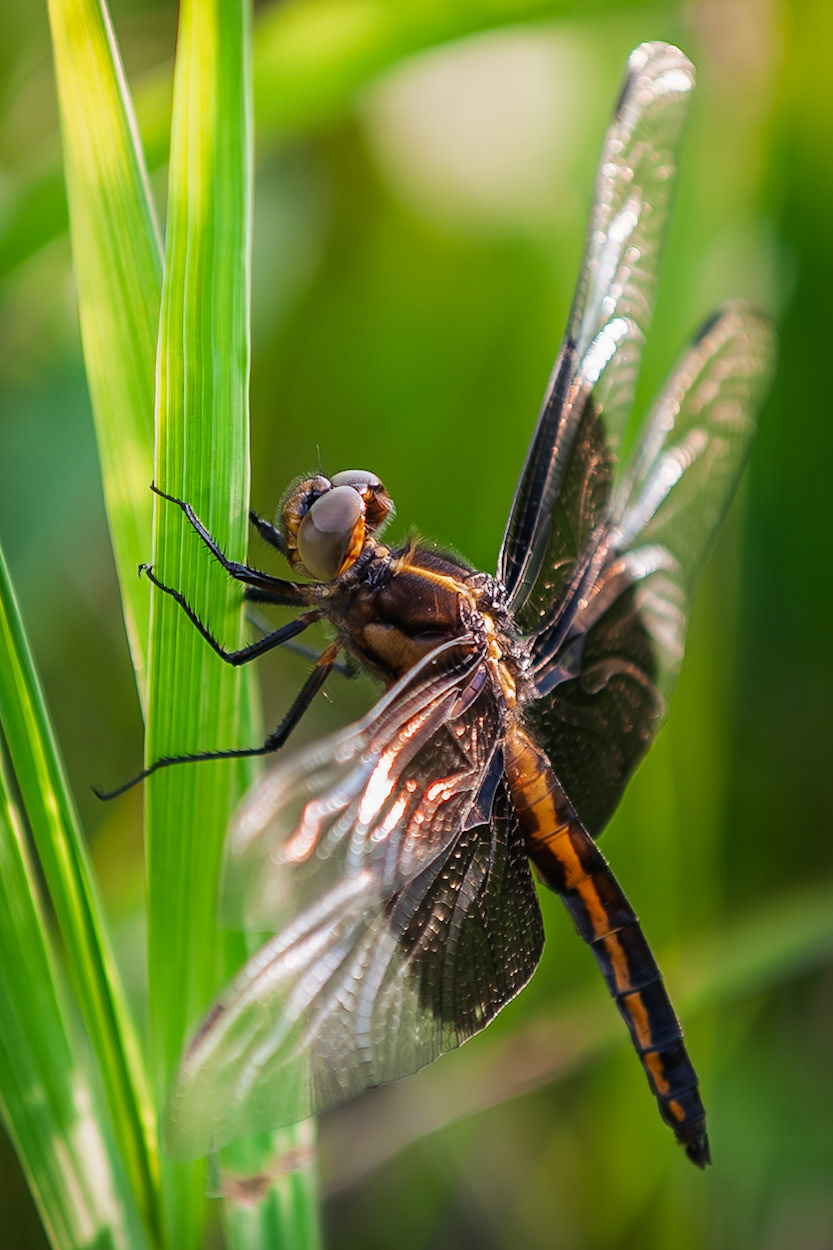
A female Widow Skimmer dragonfly (Libellula luctuosa) rests on a blade of grass at Richardson Nature Center in Bloomington, Minnesota. Dragonflies are formidable aerial predators, using their large compound eyes to spot and capture prey mid-flight.
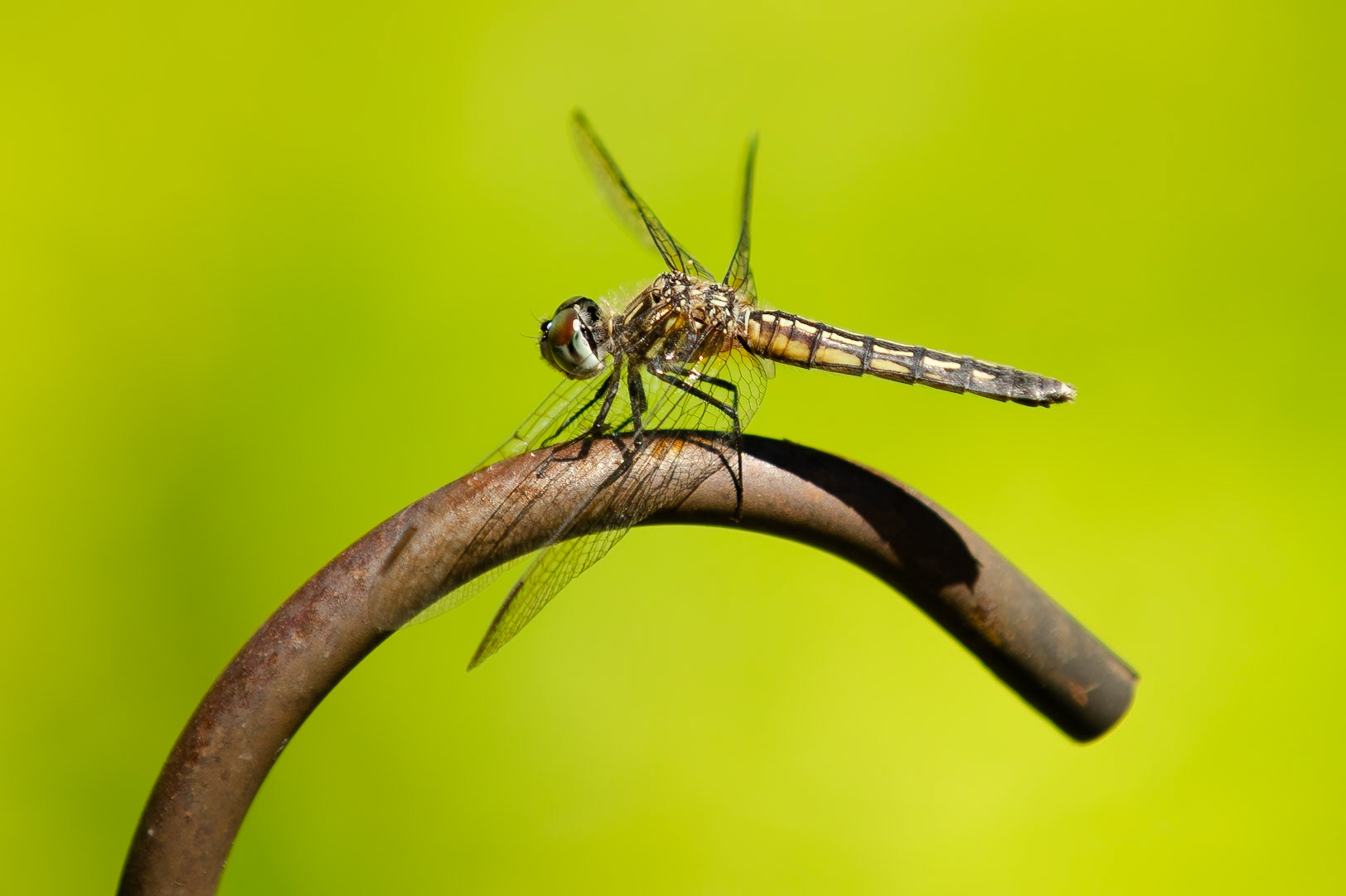
A female Blue Dasher dragonfly (Pachydiplax longipennis) perches on a rusty piece of metal in Walker, Minnesota. These common dragonflies are voracious predators, using their excellent vision to hunt for mosquitoes and other small flying insects.
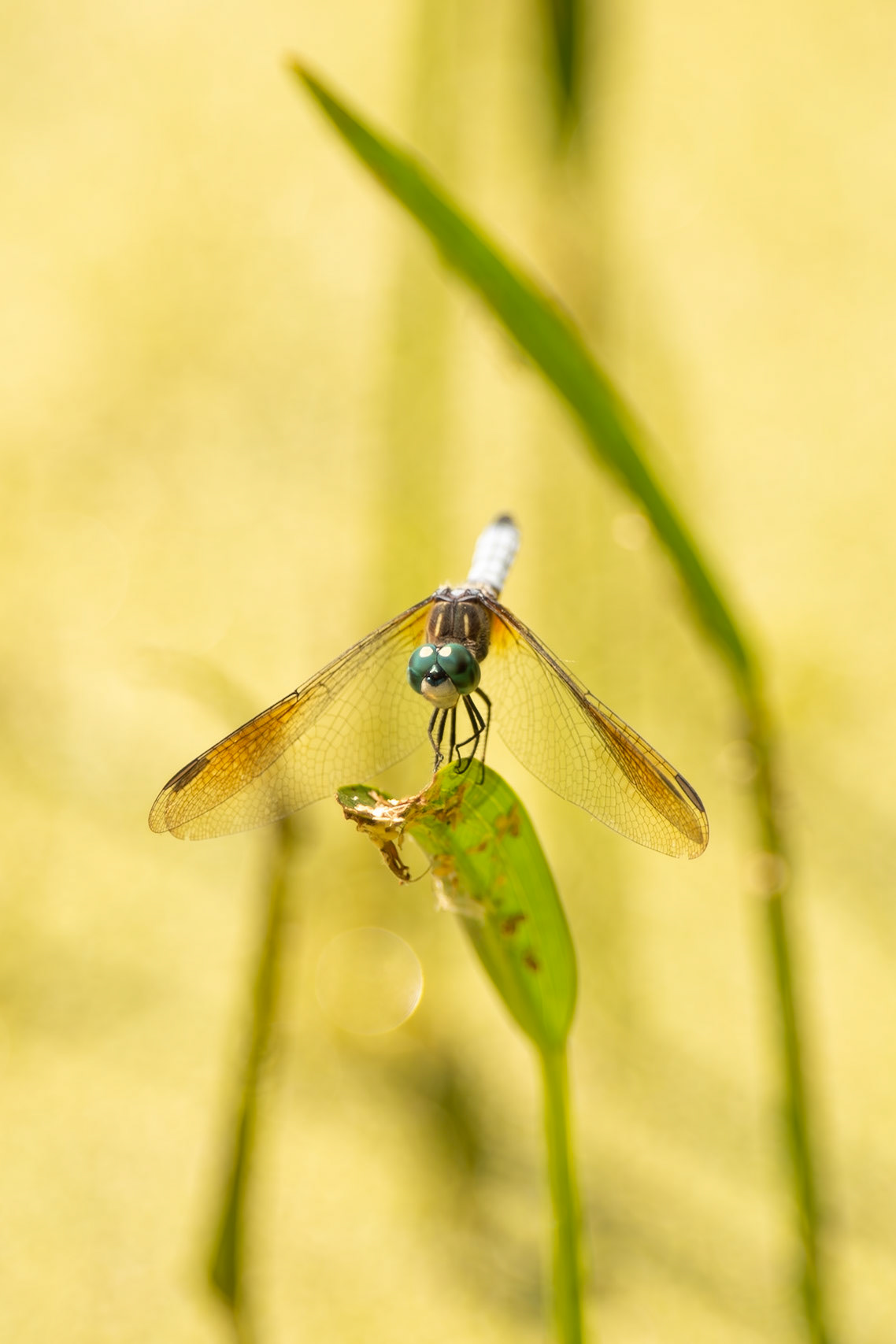
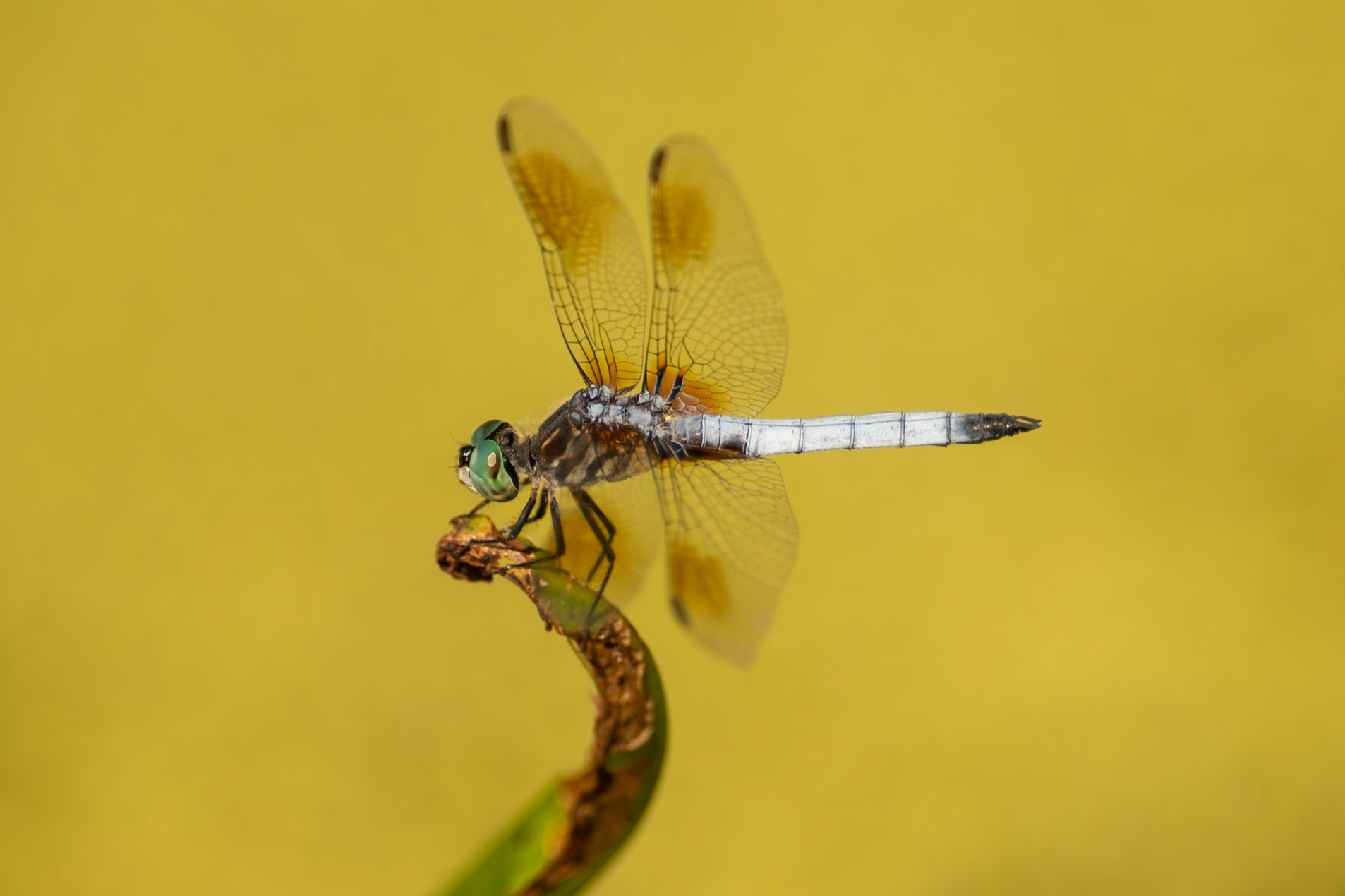
A male Blue Dasher dragonfly (Pachydiplax longipennis) surveys its territory at Richardson Nature Center in Bloomington, MN. The waxy, whitish-blue coating on its abdomen, called pruinosity, indicates its maturity as it hunts for insects over the water.
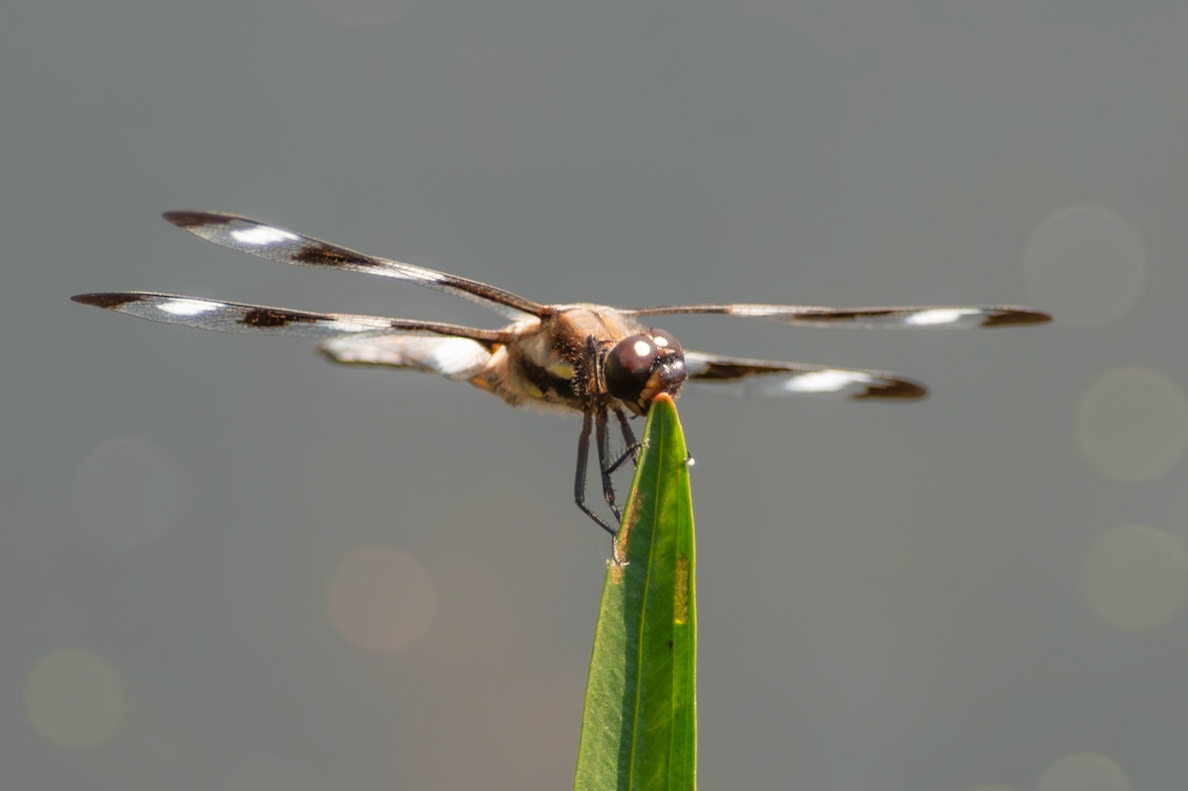
A Twelve-spotted Skimmer (Libellula pulchella) perches on a leaf at Richardson Nature Center in Bloomington, Minnesota. These dragonflies are voracious predators, using their excellent vision to hunt for mosquitoes and other insects from their perch.
A male Blue Dasher dragonfly (Pachydiplax longipennis) perches at Richardson Nature Center in Bloomington, MN. Its large compound eyes, each with thousands of lenses, give it nearly 360-degree vision to spot prey and predators.
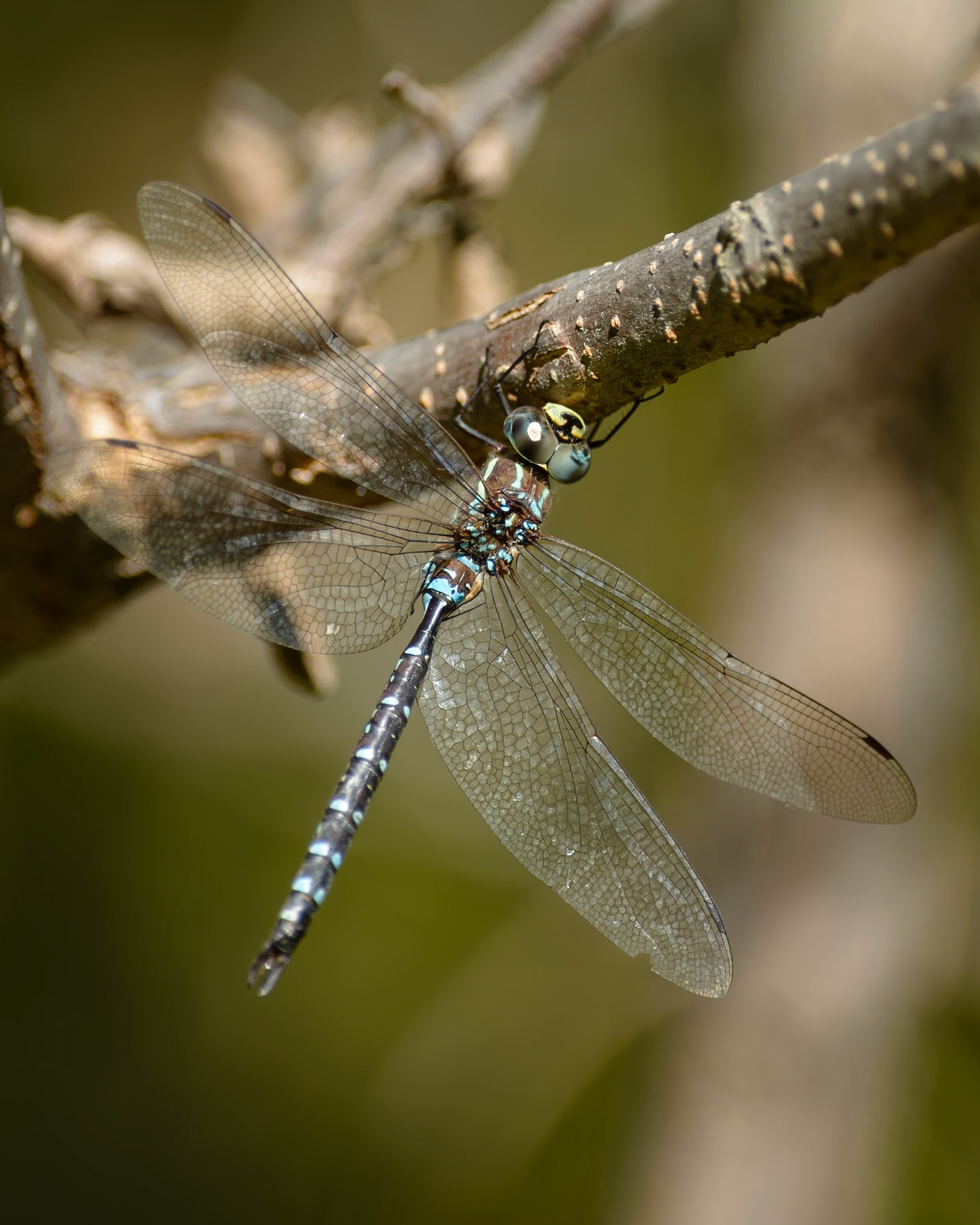
A male Canada Darner (Aeshna canadensis) rests on a branch at Ritter Farm Park in Lakeville, Minnesota. These swift aerial predators use their large compound eyes, containing up to 30,000 facets each, to hunt insects mid-flight with high precision.
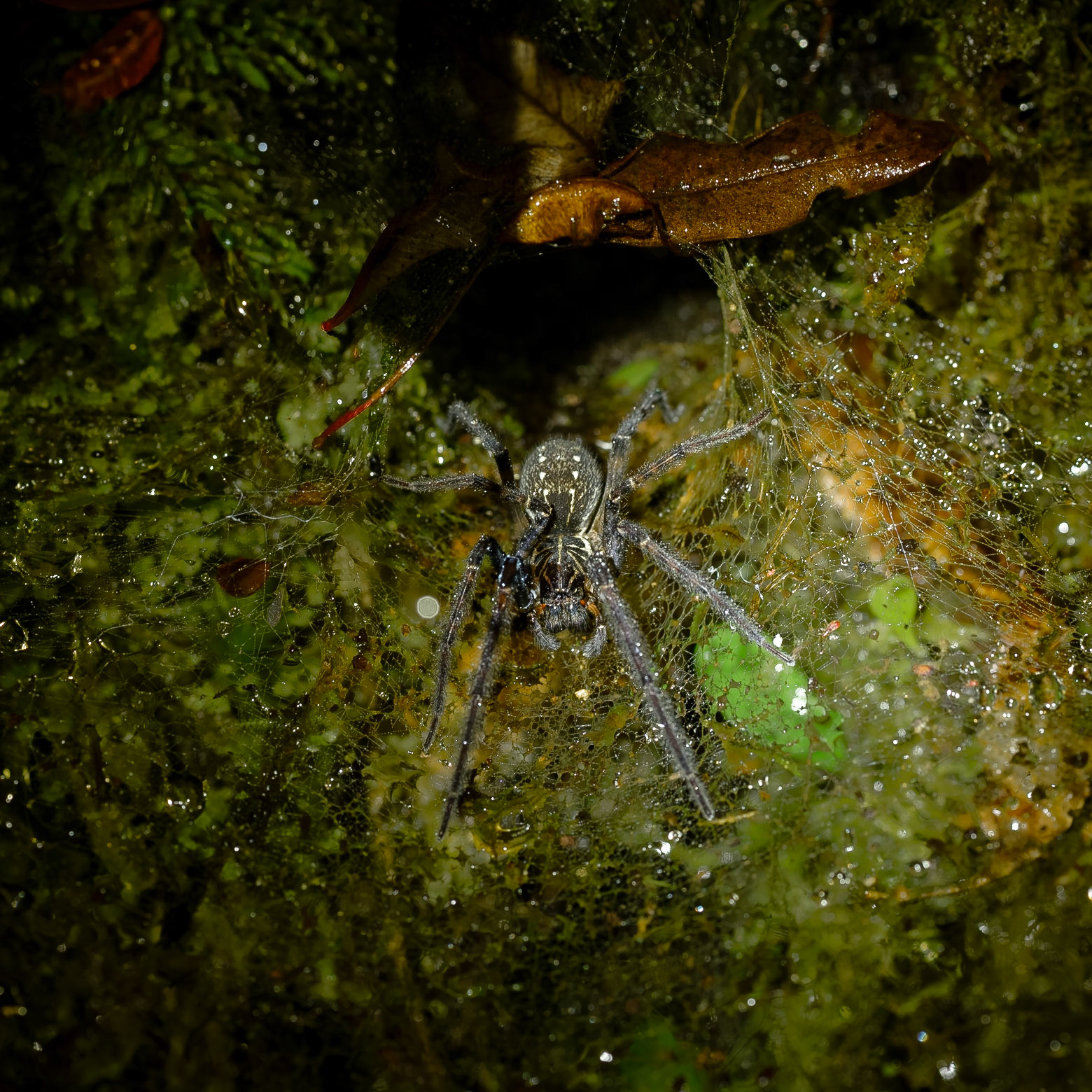
A funnel-web spider (Order Araneae) waits in its dew-covered web during a night walk at Villa Blanca Cloud Forest Hotel, Costa Rica. These spiders build non-sticky sheet webs with a funnel retreat, rushing out to ambush prey that walks across them.
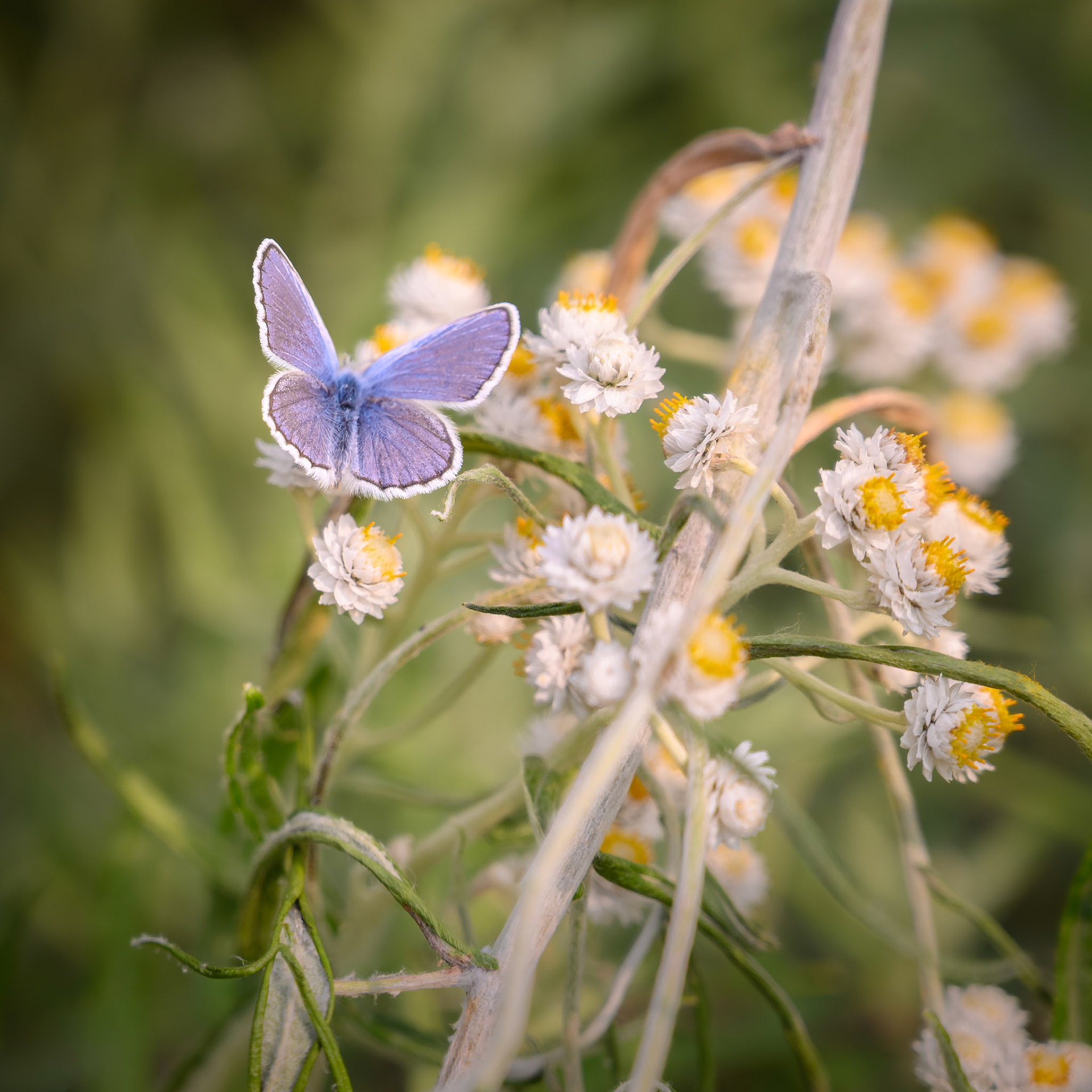
A male Anna's Blue Plebejus anna butterfly rests on pearly everlasting (Anaphalis margaritacea) in Mount Rainier National Park, WA. Its iridescent color is structural, created by light scattering off microscopic scales, not from pigment.


You may also like

Back to Top