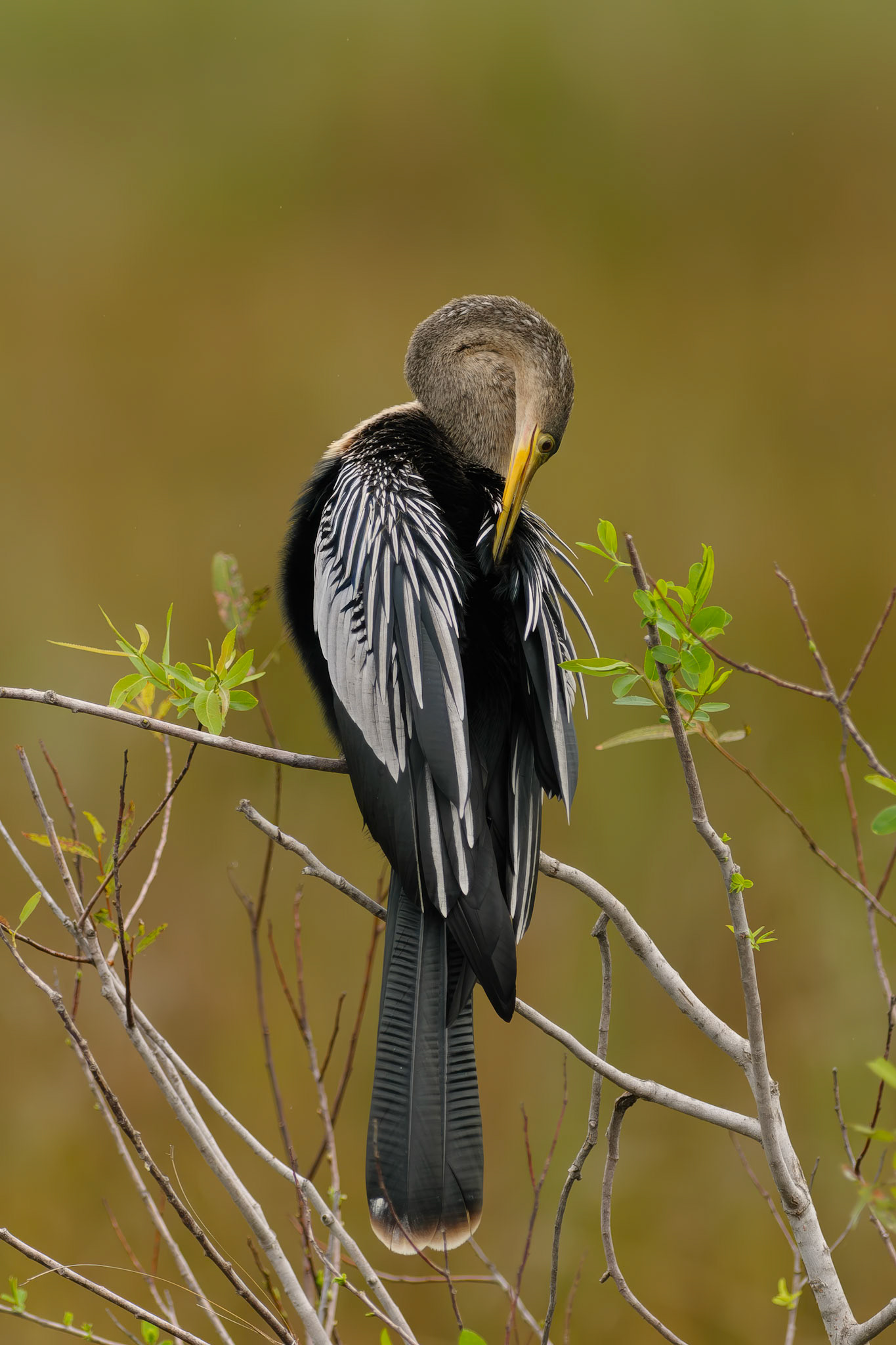
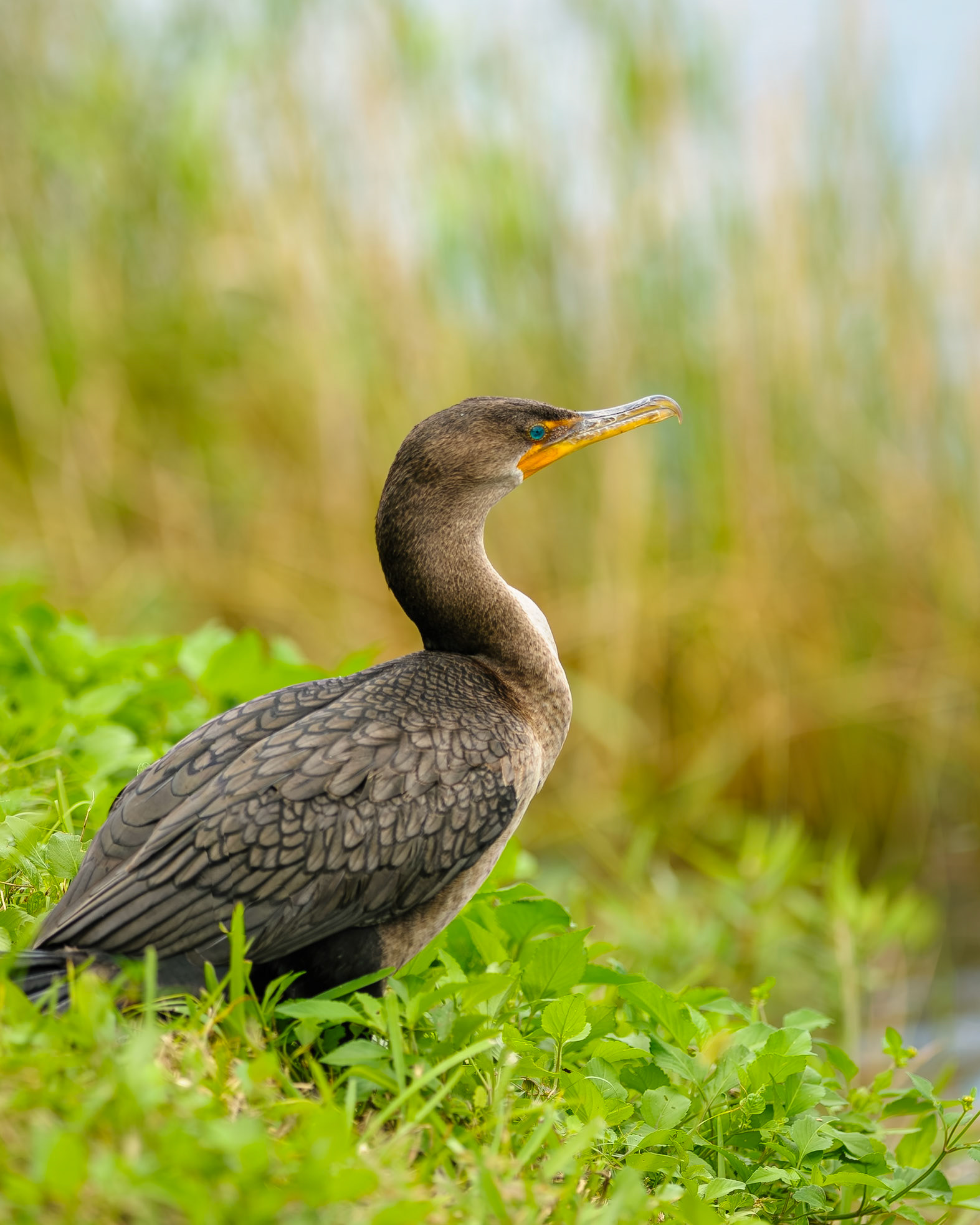
A female Anhinga (Anhinga anhinga) preens its feathers in Everglades National Park, Florida. Lacking the oil glands of ducks, these "snakebirds" must perch to air-dry their wings after hunting for fish underwater.
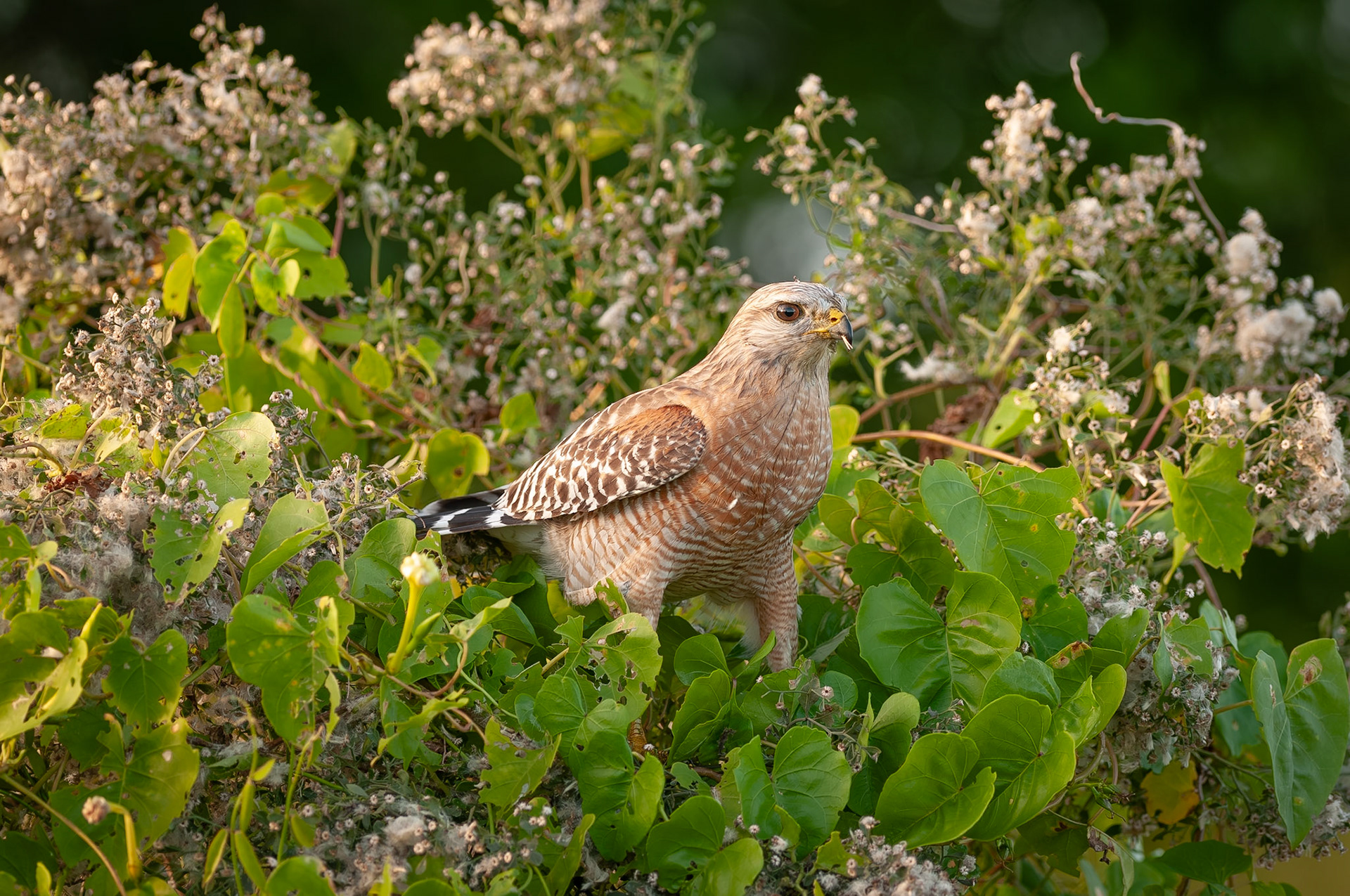
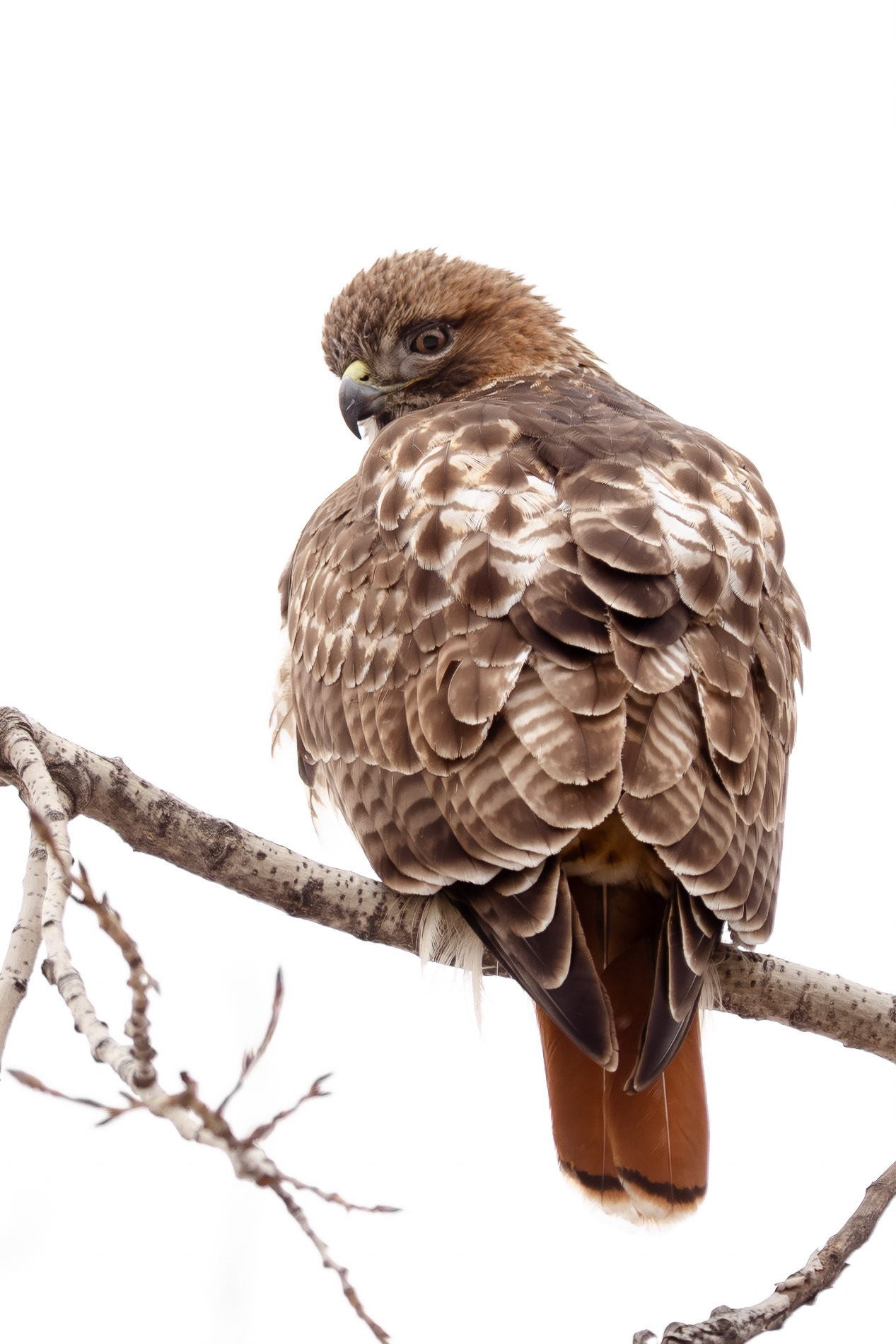
A Red-shouldered Hawk (Buteo lineatus) surveys its territory from a leafy perch in Everglades National Park, Florida. These vocal raptors are common in the park's wooded wetlands and often reuse their nests for many years.
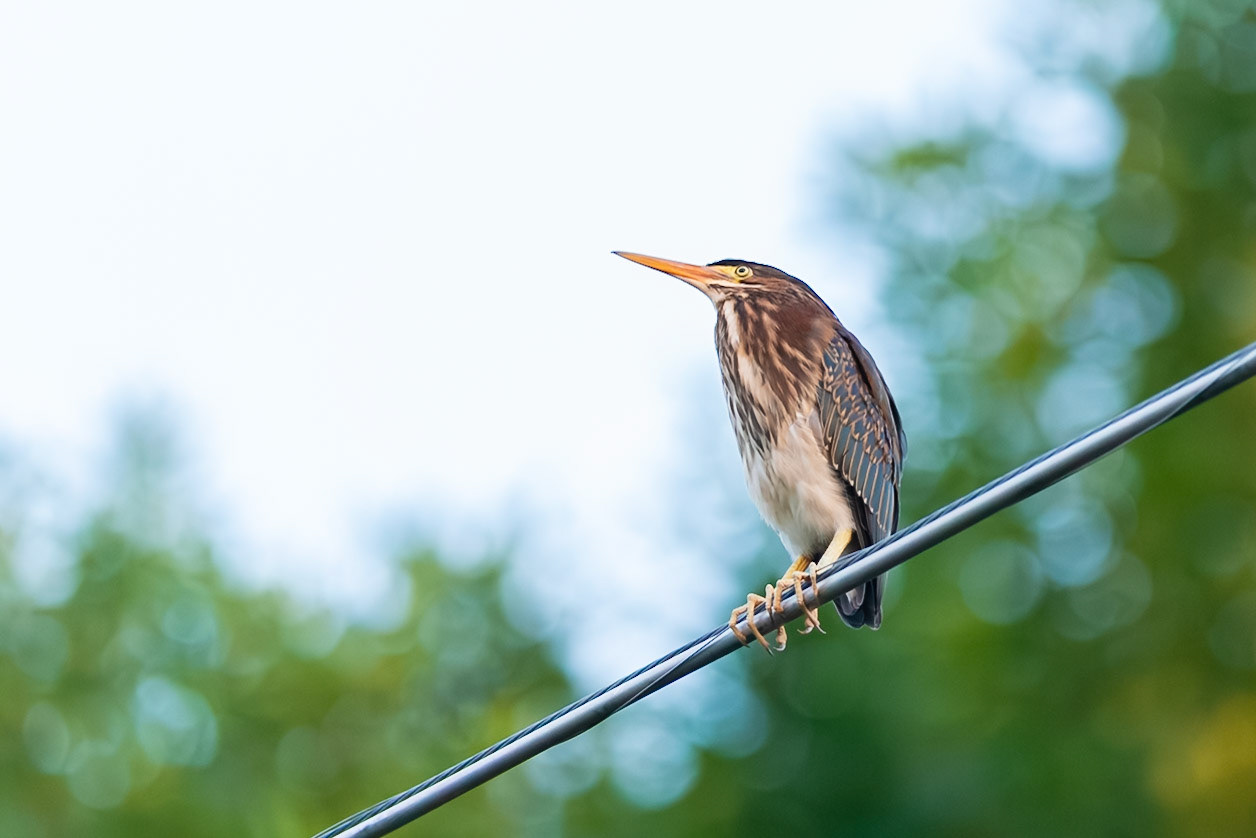
A juvenile Green Heron (Butorides virescens) perches on a wire, scanning Lake Marion Pond for an evening meal. These intelligent birds are known to use tools, like bait, to hunt for fish. Photographed in Lakeville, Minnesota.
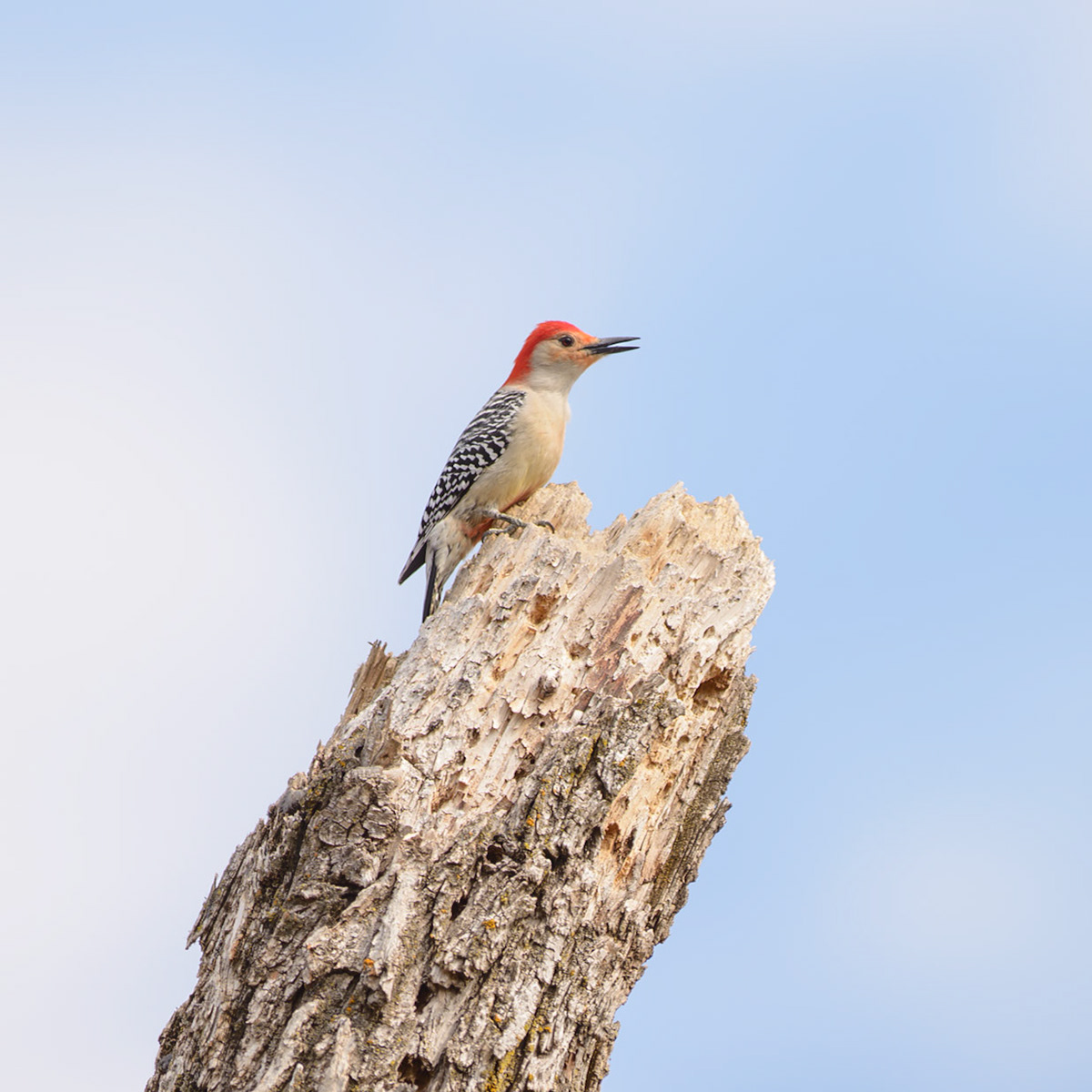
A male Red-bellied Woodpecker (Melanerpes carolinus) perches atop a dead tree, surveying its territory in the Minnesota Valley National Wildlife Refuge, Bloomington, MN. These woodpeckers have tongues that can extend nearly 2 inches past their beaks.
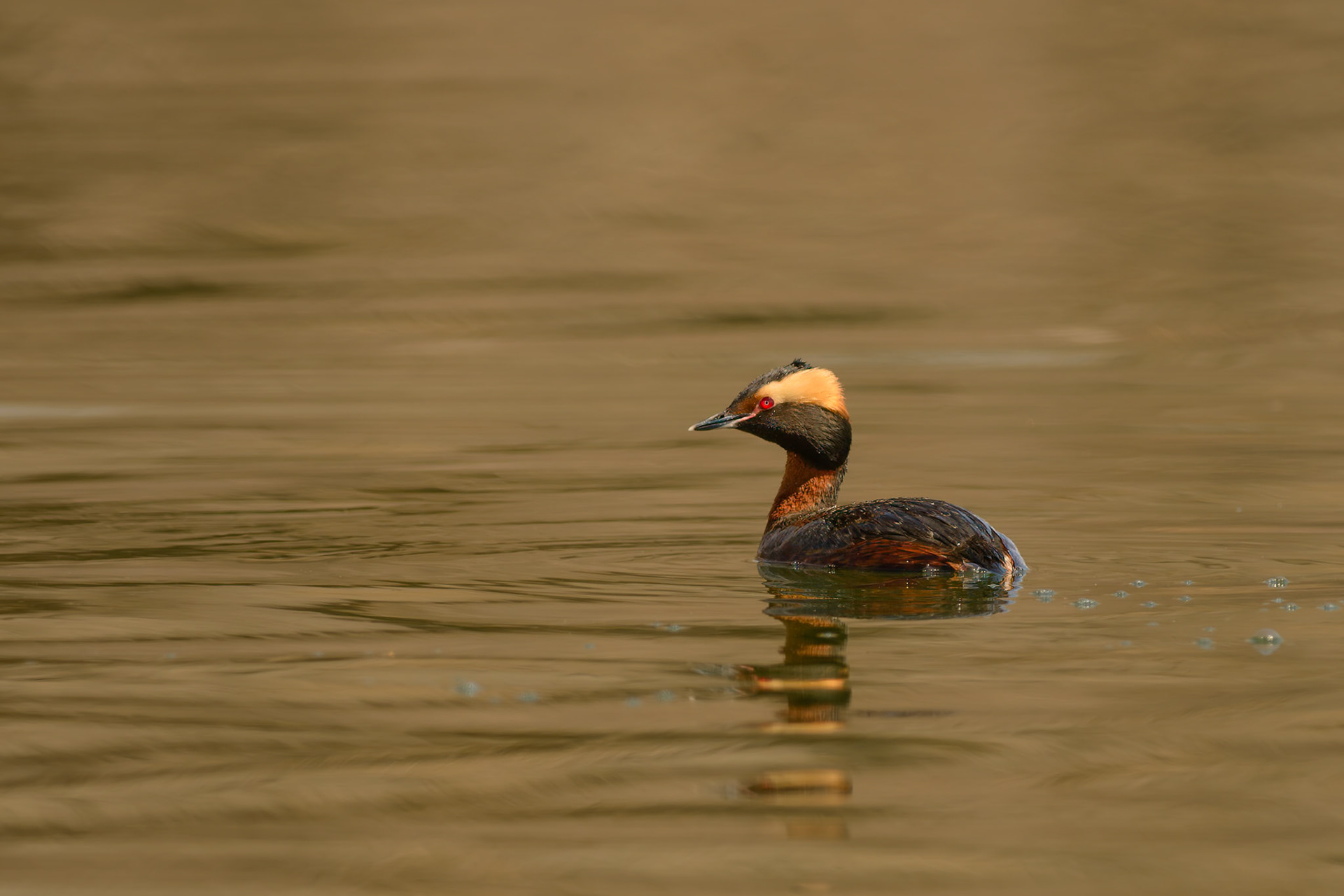
A Horned Grebe (Podiceps auritus) in breeding plumage swims on Lake Nokomis in Minneapolis, MN. These expert divers migrate through the area in spring. They are known to eat their own feathers to help create a plug in their stomach to digest fish bones.
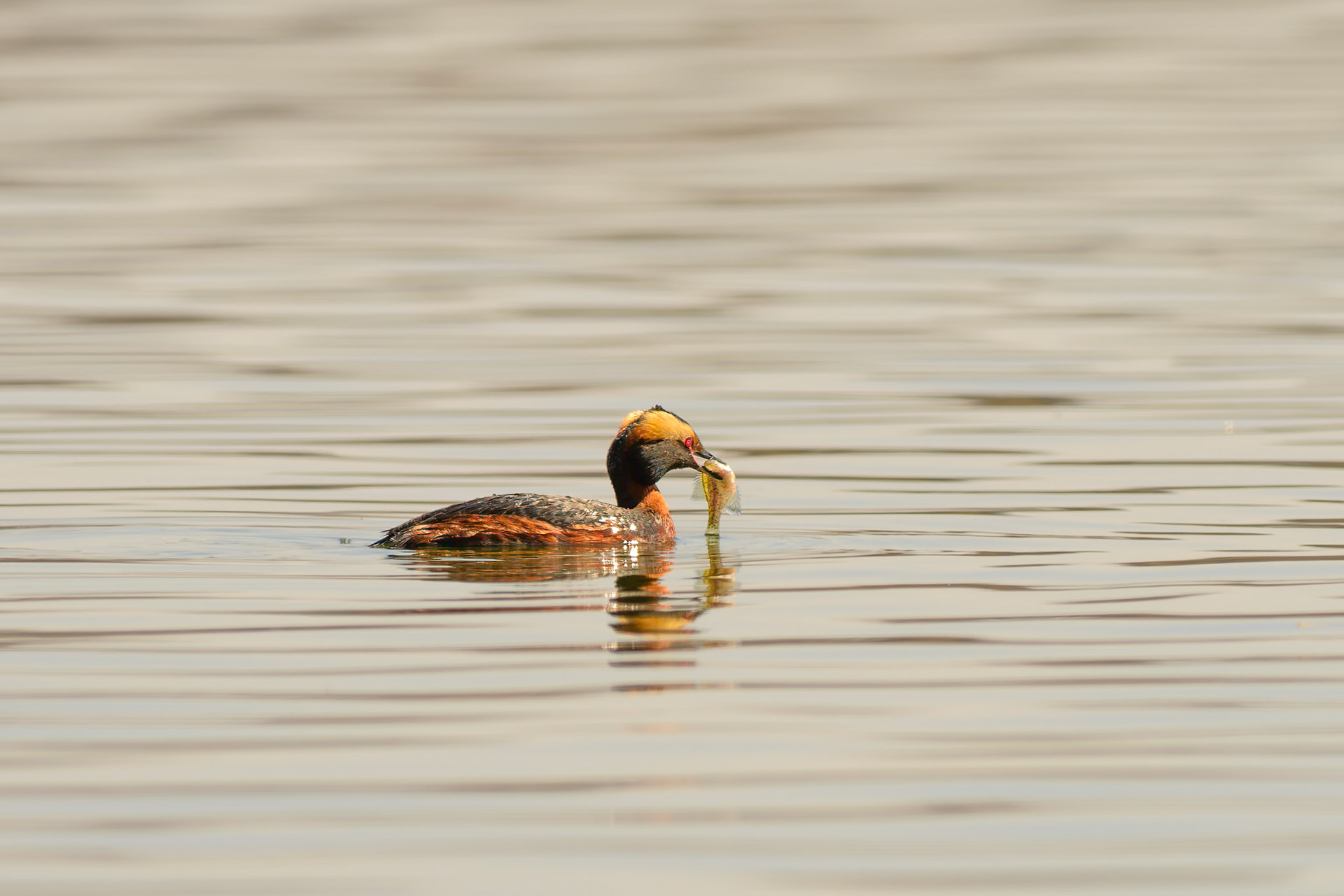
A Horned Grebe (Podiceps auritus) in breeding plumage surfaces with a freshly caught fish on Lake Nokomis in Minneapolis, MN. These skilled divers migrate through the area in spring, fueling up for their journey to northern breeding grounds.
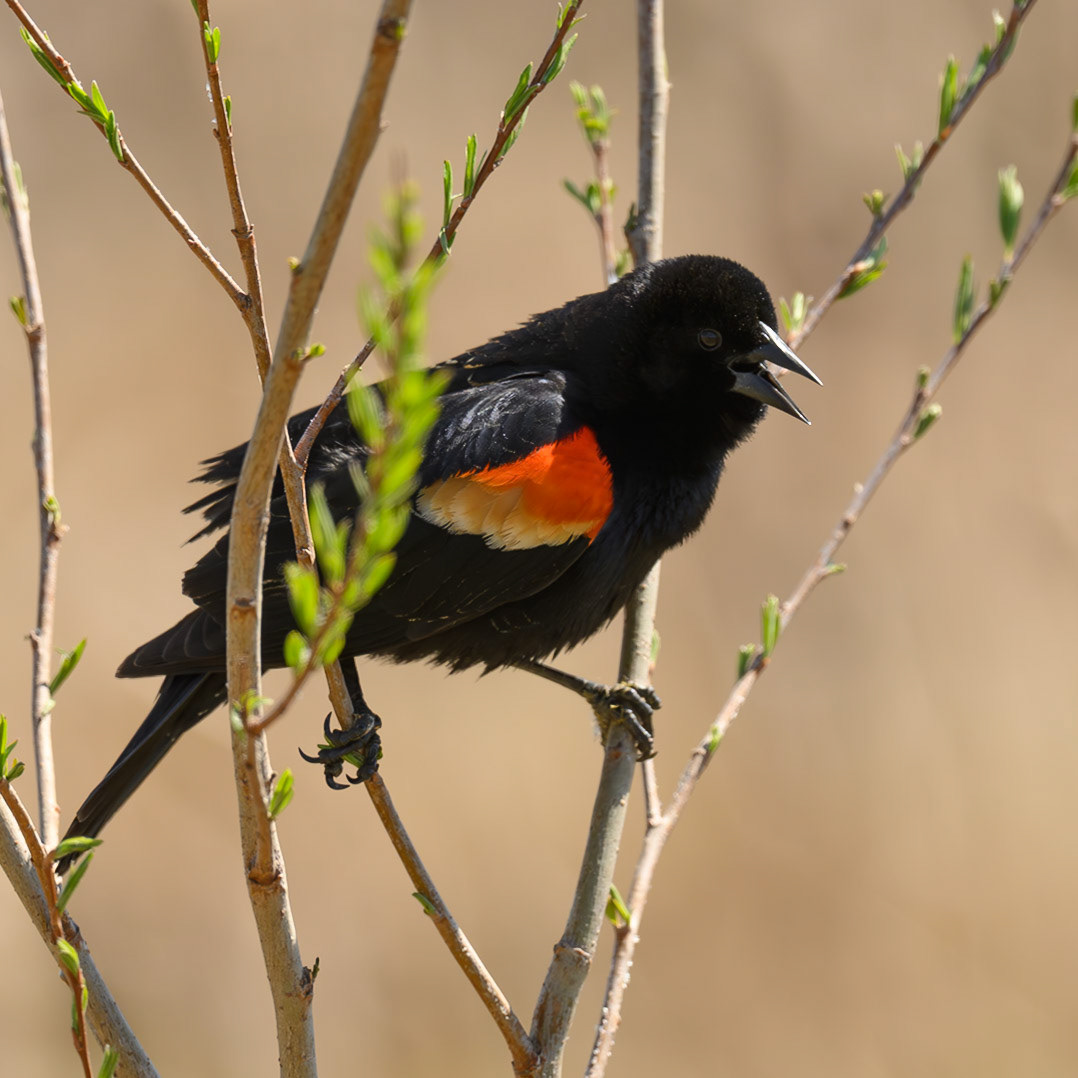
A male Red-winged Blackbird (Agelaius phoeniceus) sings to defend his territory amidst budding branches at 140th St. Marsh in Rosemount, Minnesota. These birds are highly polygynous, with a single male often having over a dozen female mates in his territory.
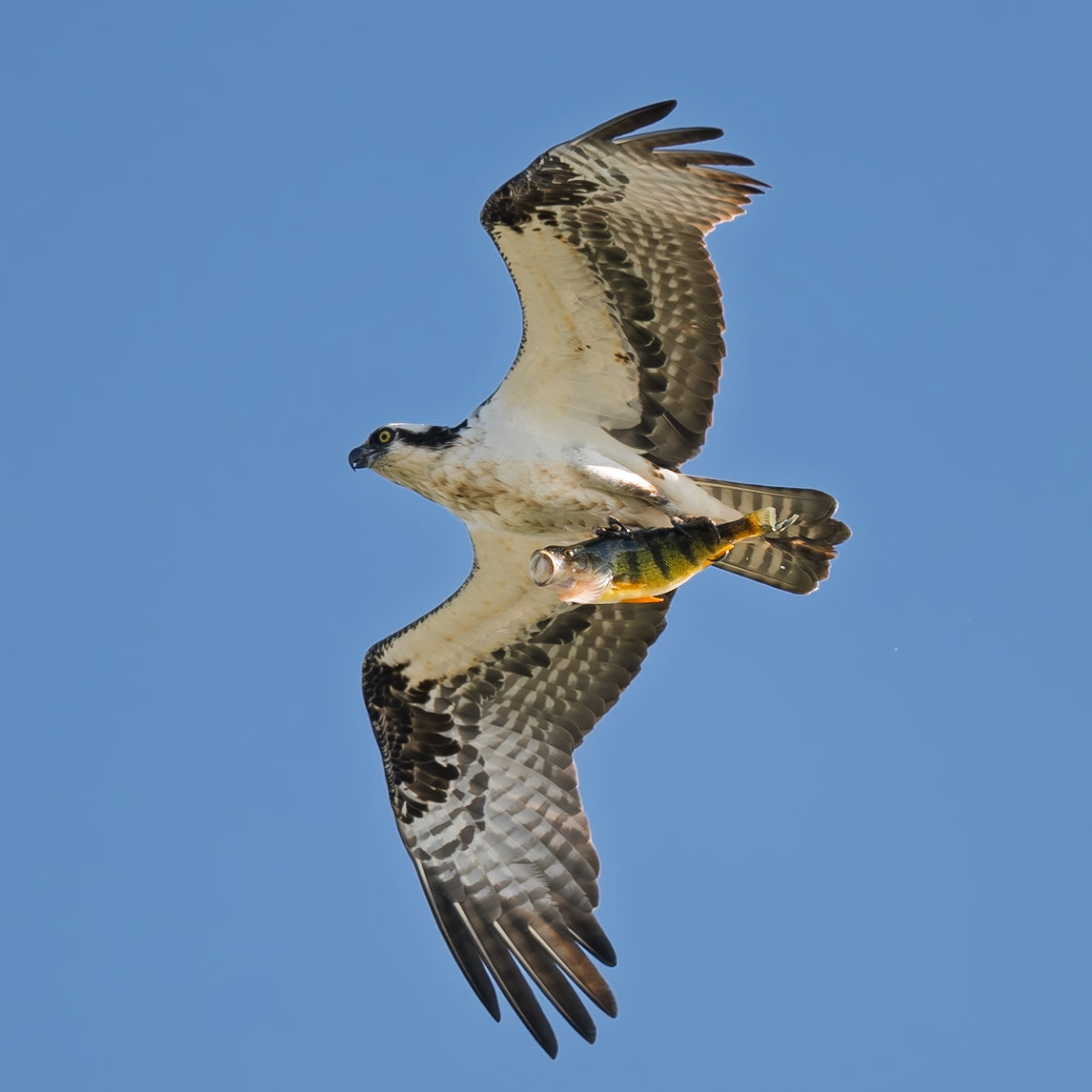
An Osprey (Pandion haliaetus) flies over Fond du Lac, Wisconsin, with a freshly caught Yellow Perch (Perca flavescens). Ospreys carry fish head-first to reduce wind resistance while flying back to their nest or a perch to eat.